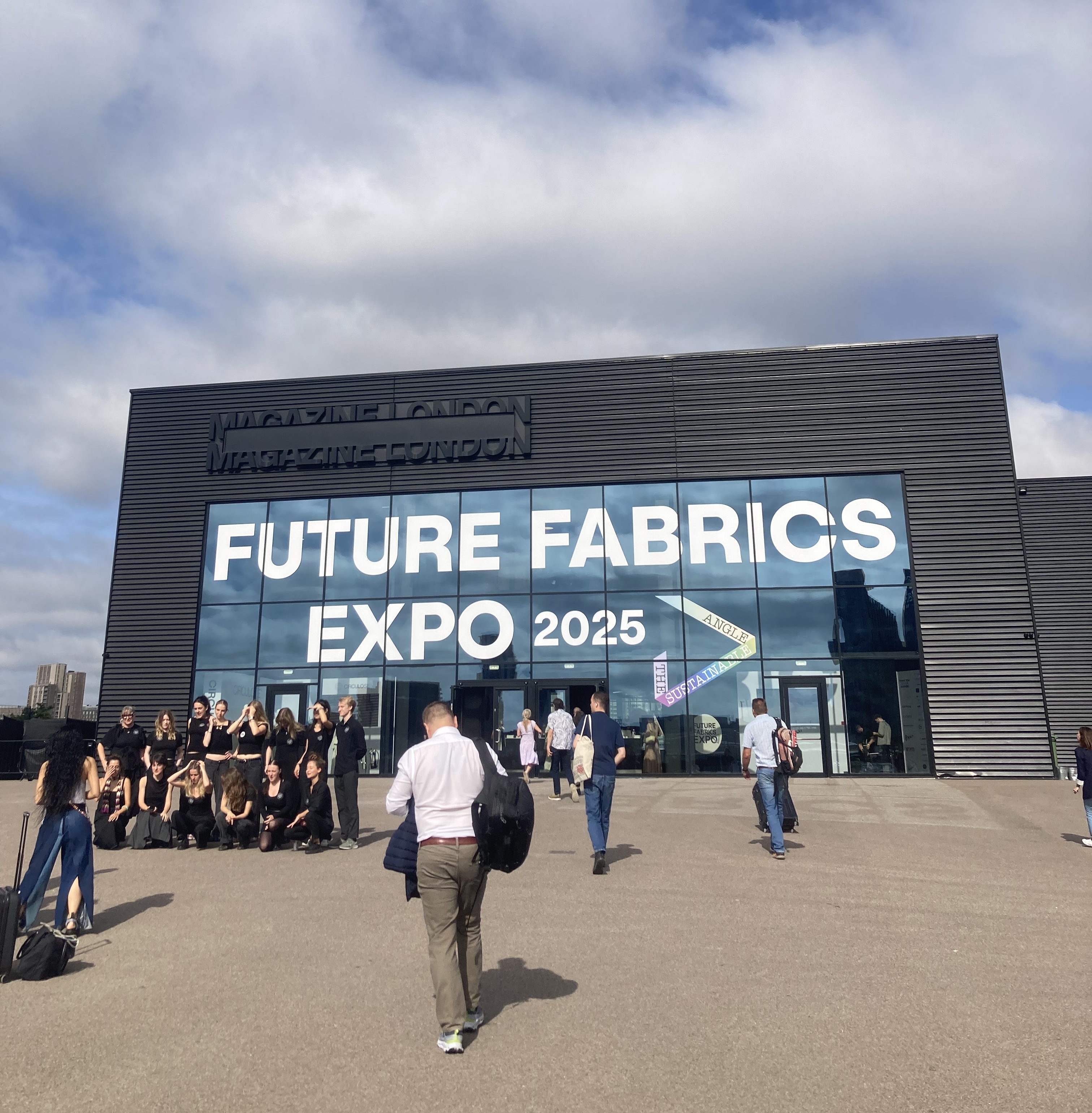
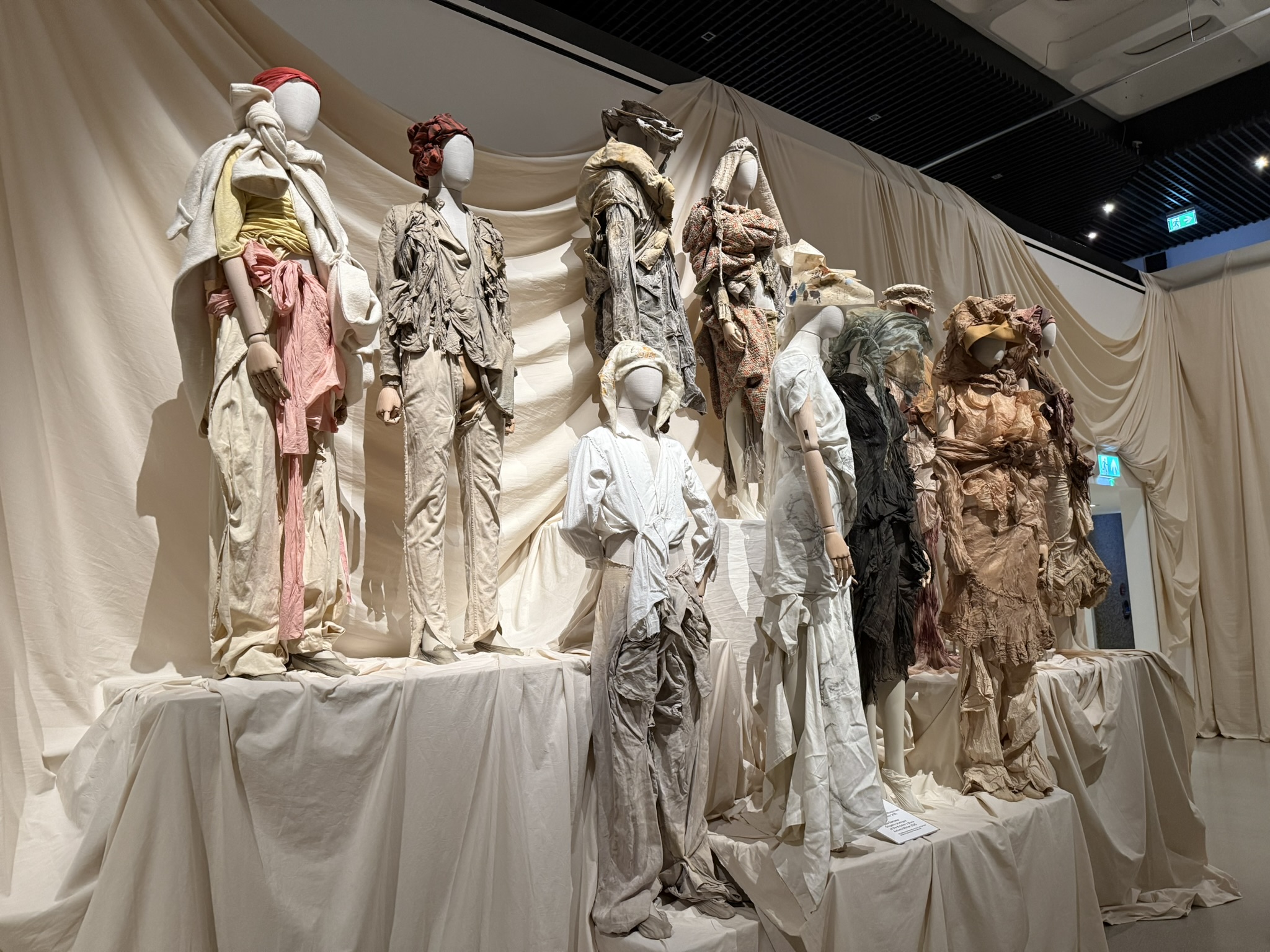
The Future Fabrics Expo brought together a range of voices from design, science, and advocacy. From long-term strategic thinking and circularity to embracing living materials and reimagining regulatory frameworks, this year’s discussions highlighted the urgent need to rethink how we create, source, and connect with our materials. Colèchi Contributors Stephanie Steele, Priya Raj, Justina Alexandroff, and Johanne Bertaux-Strenna share their unique takeaways, with words such as collaboration, transparency, and small-scale being the name of the game.
Stephanie Steele
Long-Term Thinking: Risks and Rewards
Choosing the long game means weighing risk against reward. Globalisation makes things easier and possibly safer – if something goes wrong, you can just move elsewhere. But recent shifts in trade and tariffs have shown that resilience and flexibility are crucial. It’s not just about reacting or adapting; it’s about rethinking what “good” looks like for a specific place and time. To do that well, we need to move from simply managing systems to caring for them – developing an intuitive understanding of the more-than-human world that everyone shares.
Circularity: Rethinking Craft and Innovation
Yasmin Jones Henry pointed out that circularity isn’t just about reducing waste. It’s about starting the conversation earlier – using it as a provocation for craft and creativity. Whether designers work within limits or startups test ideas with limited funds, many innovative circular projects exist, from factories to small makers. The challenge is that these efforts are often seen as separate – big factories on one side, handmade crafts on the other. But really, scientists, designers, farmers, and processors are already working together. The real question is: what can they create when they collaborate?
Many innovative circular projects exist, from factories to small makers. The challenge is that these efforts are often seen as separate – big factories on one side, handmade crafts on the other.
Yasmin Jones Henry
Home and Interiors: The Comfort Zone
While clothing brands leaned more towards plant-based fibers compared to last year, the homewares section was alive with raw, natural materials. People seem to crave simplicity and calm in their homes, making this space a showcase for authentic craftsmanship. Displays ranged from natural fiber armchairs and woven leather chairs to upcycled rice straw fabrics. Some pieces pushed boundaries – like recycled cellulose duvets or hemp-mycelium lampshades – prompting us to think about what kind of environment we truly want around us.
Clearer Communication and Next Steps
Communications appeared more thoughtful and succinct. Boards displayed further information on such topics as: understanding biodegradability in plastics; sourcing certifications; value chain origin of natural and man-made fibres and their processing routes; “bioinspired” design; “regenerative” design; planetary boundaries and doughnut economics. Gone was the term “next gen” and instead “regenerate, restore, rebalance” took its place. Large-scale panels encouraged visitors to question their sourcing strategies and traceability commitments through mapping and checklists. That being said, copy provided by the exhibitors still pertained to buzzwords that very often didn’t explain what the product or service was, continuing the confusion and inclination towards shiny new inventions.
Priya Raj
‘Cultural Circularity’ is the new Luxury
Cecile Bouton, General Manager at Nona Source, a sourcing platform for deadstock materials said the human aspect of textile will become the new luxury. This statement came about after hearing from young designer Dieter Vlasich Obermann who worked with Mayan craftsmen on his CSM graduate collection. He said ‘the human value of fashion, particularly as we move towards digitisation and larger scale fast-fashion production, will become a luxury.’ He added while working with artisans or craftsmen from countries you don’t have a connection to might be daunting, ‘people are open for their craft to be seen and understood.’ Of course, working on a smaller scale with artisanal crafts does not seem like the scalable solution many seek in circularity. Bouton added that small quantities and small collections are the future, in fact, it is nothing but an opportunity.
The human value of fashion, particularly as we move towards digitisation and larger scale fast-fashion production, will become a luxury.’
Dieter Vlasich Obermann
It’s about progress, not perfection
Amy Powney, founder of Akyn said “It’s about progress not perfection.” Rather than looking at our brands or businesses as one large cycle, which feels unapproachable to tackle, we should think of each area as a mini circuit. Think about your office premises separate to your fabric, separate to your people. She added that “honesty is the best policy”. The black denim fabric used in Akyn’s recent collection was purchased as organic denim. It was later understood that it wasn’t, however the production volumes had already been purchased. Rather than covering it up, or disposing of the fabric, the brand sent comms to their customers to explain why the black denim in the current collection is not organic. In a later conversation, she highlighted that certification can be complex and expensive for factories to obtain – and that the best way to guarantee that factories are true to what they say is to visit in person (which in many cases due to distance, isn’t possible). The solution? Try your best.
Justina Alexandroff
Rethinking Circularity in Fashion:
Circularity in fashion must move beyond mimicking outdated systems. Instead, it must forge entirely new models fit for the challenges of our time. Just as the fashion industry is being pushed to innovate in its transition to sustainability, so too must the financial and investment sectors develop new mechanisms to support and scale these solutions. As Julia Pelipas from BETTTER, an automated upcycling company, puts it: “We need to move from responsive solutions to systemic solutions.”
“We need to move from responsive solutions to systemic solutions.”
Julia Pelipas
Regulatory Divergence – UK vs EU:
While the UK was expected to align with the EU’s progressive environmental and sustainability legislation, it now seems that the EU is regressing. The European Commission’s Omnibus IV Simplification Package – part of its Single Market Simplification agenda – aims to cut red tape, lower costs, and modernise regulation which is raising concerns amongst the environmental and circulatory movements. There are concerns over the pace and direction of policy development. When will legislation catch up with solution-oriented creative sectors?
Elevating Natural Fibres in Industry Dialogue:
Four years after Colèchi’s vegan leather guide, Fashion Roundtable has released a Global Market Report on the underrepresented plant fibre industry, available via FIBRAL. This marks a significant shift: independent research is becoming increasingly industry and market-facing, signalling a maturation of the conversation around biomaterials and their role in reshaping the fashion economy.
Johanne Bertaux-Strenna
Embracing Living Materials: Lessons in Craft
The importance of respecting and embracing the “livingness” of natural materials was a significant insight shared by Chris Bellamy from Bio Crafted. His background in automotive design fostered a fixation on perfection and consistency, but he now champions working with materials like living willow that respond, evolve, and engage in a more genuine way. The act of caring for these materials – akin to nurturing houseplants – builds a deeper connection, highlighting craftsmanship’s role in fostering resourcefulness, imperfection, and emotional resonance. Indigenous knowledge further reveals how resourceful material use can inspire respectful, innovative applications. Projects like Allday Goods exemplify this approach by recycling plastics into practical items like knife handles, collaborating with brands such as Malden Sea Salt to incorporate recycled packaging and brand identity into sustainable products.
The act of caring for these materials – akin to nurturing houseplants – builds a deeper connection, highlighting craftsmanship’s role in fostering resourcefulness, imperfection, and emotional resonance.
The Importance of Narrative and Storytelling
The conversations at FFE also illuminated the vital role of storytelling and education in advancing sustainability. William Knight of Material Matters helps translate complex regulations into engaging stories, emphasising that craftsmanship remains essential in reconnecting consumers with materials. His collaborations with firms like TP Bennett illustrate how designing with sustainability and repairability in mind can transform spaces and products.
Biotech innovations like Mycoworks, which fuse mycelium with cotton for diverse applications, showcase how combining craft with science can unlock new sustainable opportunities. Meanwhile, Simone Suss’s work in regenerative design advocates for creating luxury products through accessible craft methods, guiding clients to ask better questions and make conscious choices. Her collaborations – such as with Stuart Scott and Goldfinger – highlight how working with fallen or naturally extracted materials can produce beautiful, waste-free design with emotional depth and longevity.
Conclusion
Overall, these talks converged around key themes: the urgent need for regulatory reform to ban harmful chemicals and adopt natural, built-in fire safety solutions; the promise of living and dynamic materials like wool, seaweed, and mycelium that encourage care and deeper sustainability; and the indispensable value of craft – not just as aesthetics, but as storytelling, connection, and resourcefulness. Success depends on fostering collaboration between designers, communities, scientists, and marketers, amplifying the beauty of imperfection, and rewriting the narrative and in turn the policies to make ethical fashion accessible and compelling for all.